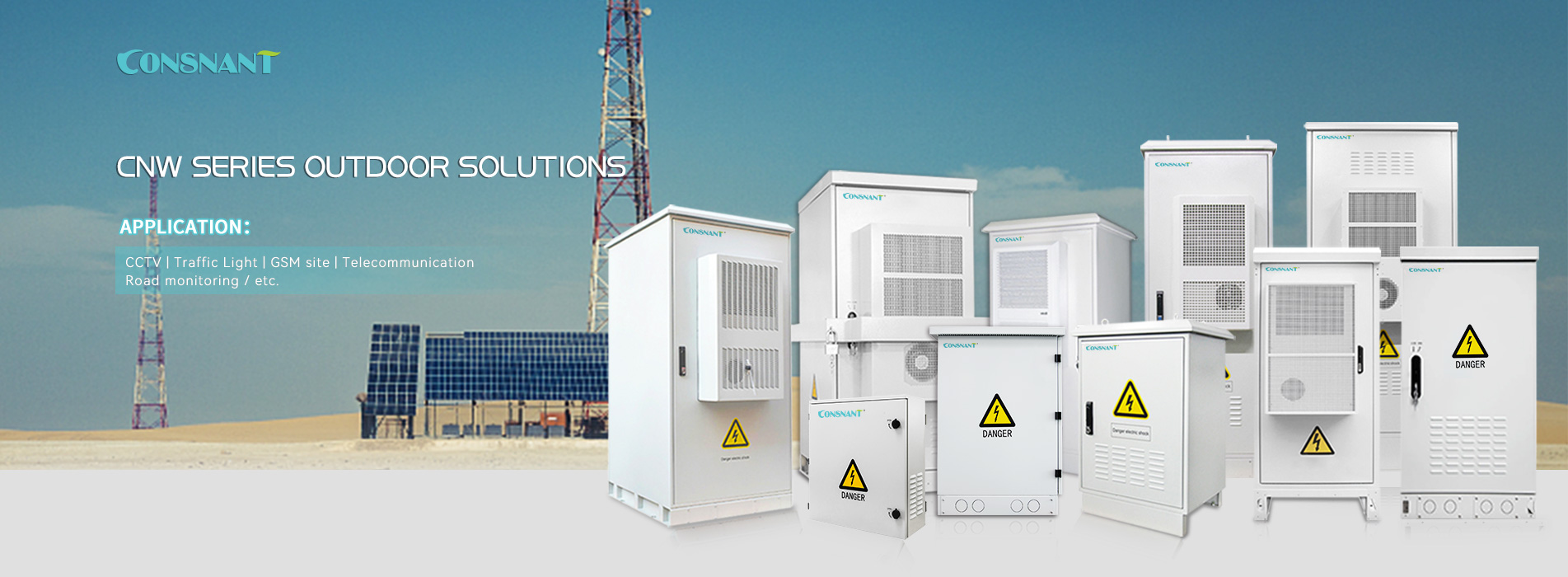
UPS ngoài trời

How to Plan Modular UPS Capacity and N+X Redundancy for a Data Center?

Nov 02, 2026

Modern enterprise, colocation and AI‑powered data centers demand flexible, high‑availability uninterruptible power supplies. Modular UPS systems allow incremental capacity expansion and built‑in module‑level N+X redundancy, which outperforms traditional monolithic UPS for fast‑growing IT environments. However, improper capacity calculation or wrong redundancy configuration will cause waste of investment, low operating efficiency or hidden risks of power outage.

This article walks you through practical workflows for modular UPS sizing and N+X redundancy design, with real‑world reference to Consnant CNM330 series modular online UPS for data‑center‑grade power protection.

Step1: Calculate Real Critical IT Load (Avoid Over‑Sizing or Under‑Sizing)

Capacity planning must start from measured real‑world load instead of theoretical nameplate value. Many data‑center projects over‑provision UPS capacity blindly and suffer poor partial‑load efficiency.

  1. Sum up critical real power (kW), not just kVA. Include servers, storage, network switches, and also UPS‑supported cooling equipment. For AI GPU racks, use sustained operating power instead of peak instantaneous value.
  2. Apply diversity factor: Not every rack runs at full power simultaneously. Typical diversity factor:
    • General enterprise racks: 0.7‑0.85
    • AI / GPU intensive racks: 0.9‑1.0
    • Storage array racks:0.8‑0.9
  3. Reserve reasonable future growth margin: Keep the normal operating load within 60%‑80% of total UPS usable capacity. This range balances system efficiency and expansion space.

Important note: Do NOT double‑count redundancy capacity as growth headroom. Redundancy modules are for fault tolerance, not for future IT load growth.

Consnant CNM330 modular UPS adopts 50 kW high‑density hot‑swap power module, supports flexible capacity stacking from 50 kW up to 600 kW per cabinet, matching phased deployment of small‑medium IDC and large‑scale AI data centers.

Step2: Understand N, N+1, N+2, N+X Redundancy for Modular UPS

N+X redundancy means deploying N working modules for carrying real‑time load, plus X spare redundant modules. X stands for quantity of backup modules that can bear load when modules fail or are pulled out for maintenanceSchneider ...。

  • N configuration: Exactly enough modules for present load, zero spare. No fault tolerance. Only suitable for non‑critical edge sites.
  • N+1: 1 spare redundant module. If one module fails or needs hot‑swap maintenance, remaining N modules can fully support critical load. Fits Tier‑II / basic Tier‑III enterprise data centers, most popular cost‑effective solution.
  • N+2: Two spare modules. Tolerate two‑module simultaneous failure or maintain two modules at the same time. Target for high‑reliability Tier‑III / Tier‑IV mission‑critical colocation and financial data centers.
  • 2N / 2(N+1): Dual independent UPS bus architecture. Each bus can independently bear full critical load, highest fault‑tolerance for Tier‑IV facilities.

Consnant CNM330 series supports configurable N+X redundancy via LCD touch screen. System will trigger alarm when load exceeds redundancy protection threshold, and can reach system availability up to 99.999% under N+2 setup, MTBF up to 250,000 hours. Power modules support online hot‑swap: technicians replace faulty modules without shutting down IT loads. Up to 4 cabinets can be paralleled for larger‑scale deployment.

Step3: Key Factors to Determine Your X Value in N+X

Before locking your redundancy scheme, evaluate these four dimensions:

  1. Uptime Tier requirement: Match Uptime Institute Tier standards. Tier‑III requires concurrent maintainability; Tier‑IV demands fault‑tolerant power path.
  2. Business outage loss: How much financial loss will be caused by power interruption? Financial, medical and core AI computing facilities usually choose N+2 or higher.
  3. On‑site maintenance condition: If local engineer response is slow, increase X to reduce maintenance risk window.
  4. Total‑Cost‑of‑Ownership(TCO): Each additional redundant module raises CAPEX, but lowers risk of downtime loss. Balance reliability and investment budget.

Common Pitfalls in Modular UPS Capacity & Redundancy Design

  1. ❌ Confuse kVA and kW, ignore actual output power factor. Modern IT loads draw real power(kW). Consnant CNM330 reaches output power factor 1.0 to deliver more real power within same cabinet footprintConsnant.
  2. ❌ Treat redundant X‑modules as expansion capacity. When IT load grows, you still need to add working N‑modules, cannot consume redundancy spare capacity.
  3. ❌ Run modular UPS at ultra‑low load (<30% rated). Too‑light load reduces overall system efficiency. Modular UPS should shut idle redundant modules properly if supported.
  4. ❌ Ignore battery matching after UPS capacity upgrade. After adding power modules, verify charging current, battery bank voltage and backup runtime together. Consnant CNM330 equips intelligent battery management system with adaptive charging current adjustment for different battery groups.

Practical Configuration Example for Consnant CNM330 Modular UPS

Scenario: Enterprise Tier‑III data center, real critical IT load = 150 kW, 50 kW per power module.

  1. Minimum working N modules = 3 units (3 × 50 kW =150 kW)
  2. Require N+1 redundancy → total installed modules: 4 units, total cabinet capacity:200 kW
  3. Normal operating load rate: 150÷200 =75%, falls within optimal 60‑80% operating window.
  4. If upgrade to high‑security financial data center requirement, switch to N+2: total 5 modules (3+2), total capacity 250 kW.

Multiple CNM330 cabinets support parallel expansion, so data centers can purchase initial modules matching current load and add power modules later as business expands, avoiding large‑sum one‑time upfront investment.

Additional Site Checks Before Final Deployment

  • Confirm cabinet floor load, rack space, ventilation and heat dissipation condition for modular UPS cabinet.
  • Confirm communication interface: SNMP, Modbus‑TCP, dry‑contact alarm for integrating into data center DCIM monitoring platform. Consnant CNM330 supports above industrial standard interfaces.
  • Validate backup runtime requirement, select proper VRLA or lithium‑ion battery configuration.

Conclusion

Modular UPS brings outstanding scalability and redundancy advantages, yet reliability does not simply come from buying more modules. Correct workflow: measure real IT load → set reasonable operating load percentage → define N working modules → select X redundancy number according to tier & business risk → verify battery, monitoring and site environment.

Consnant CNM330 modular UPS series provides flexible N+X redundant architecture, hot‑swappable power modules and high power‑density design, helping data‑center operators achieve phased construction and balanced TCO between reliability and cost.

FAQ

Q1: Is N+1 always enough for Tier‑III data center?

A1: Not absolutely. N+1 satisfies concurrent maintainability on module‑level, but you still need to check distribution path, bypass and battery system design to fully meet Tier‑III criteria.

Q2: Can I add redundant modules later after the modular UPS cabinet is deployed?

A2: Yes for Consnant CNM330 series. Empty slots inside cabinet reserve space for future hot‑swap power‑module insertion, no cabinet replacement required.

Q3: What is the difference between module‑level N+X and traditional whole‑unit N+1 parallel?

A3: Modular N+X implements redundancy inside one cabinet via power modules, smaller footprint, maintenance without whole‑unit shutdown; traditional N+1 parallel uses complete independent UPS cabinets, fits 2N dual‑bus large‑scale architecture.

Q4: Does CNM330 modular UPS support lithium‑ion battery?


A4: Yes. The intelligent charging algorithm supports both lead‑acid VRLA and lithium‑iron phosphate battery banks, with adjustable charge parameters.

Cần giúp đỡ? Trò chuyện với chúng tôi

để lại lời nhắn
Nếu bạn quan tâm đến sản phẩm của chúng tôi và muốn biết thêm chi tiết, vui lòng để lại tin nhắn ở đây, chúng tôi sẽ trả lời bạn ngay khi có thể.
nộp
LIÊN HỆ CHÚNG TÔI #
0086 13501592453

giờ của chúng tôi

Thứ Hai 21/11 - Thứ Tư 23/11: 9 AM - 8 PM
Thu 24/11: đóng cửa - Happy Thanksgiving!
Thứ Sáu 25/11: 8 AM - 10 PM
Thứ bảy 26/11 - CN 27/11: 10 giờ sáng - 9 giờ tối
(tất cả các giờ đều là Giờ phương Đông)

Trang chủ

Các sản phẩm

whatsApp

liên hệ

Start a Conversation

Hi! Click one of our members below to chat on